How AI Chatbots Actually Work, in Plain English
Under the friendly chat window is a model that predicts the next word, over and over. Here is what that means, why it sounds so confident and where it goes wrong.
Noor Castellanos Editor, AI and Software
Type a question into an AI chatbot and an answer appears a word at a time, as if someone were typing back. Nobody is. What you are watching is a language model doing one narrow job extremely quickly: guessing which word, or piece of a word, should come next.
Prediction, not lookup
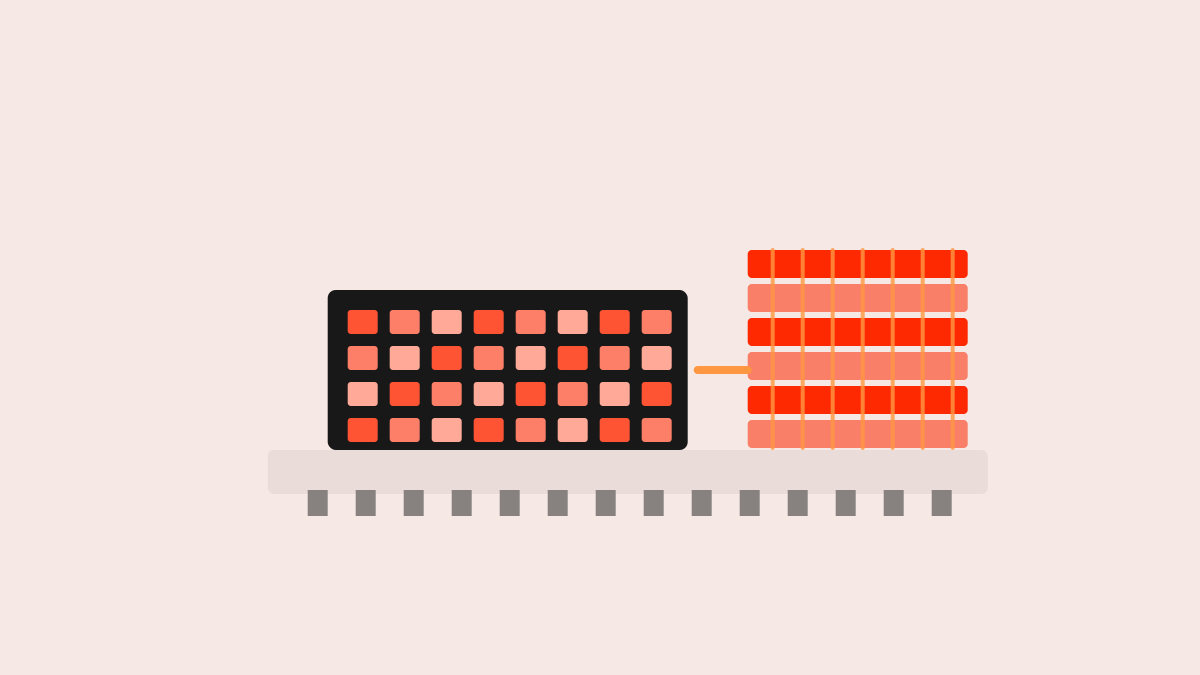
A large language model is trained on a huge amount of text. During training it repeatedly sees a passage with the next word hidden and adjusts billions of internal numbers so that its guess gets a little better each time. After enough rounds it becomes very good at continuing text in a way that sounds right.
When you ask it something, it does the same thing. It reads your question, predicts a likely next word, adds it to the text, and predicts again. It is not searching a database of facts for your answer, which is why the same question can get slightly different replies.
It is not looking anything up. It is writing the most plausible next word, again and again.
Why it sounds so sure of itself
Fluent text and correct text are different things. The model has learned what confident, well-organised answers look like, so it produces them whether or not the facts underneath are right. When it lacks the information, it can fill the gap with something plausible but invented. People call this hallucination.
Try this
Ask the chatbot to list its sources, then open two of them. If a link does not exist or does not say what the answer claims, treat the rest of the answer with the same suspicion.
What it is good at
Language models shine at tasks where the shape of the answer matters more than a single precise fact: drafting an email, summarising a long document you supply, rewriting text in a different tone, or explaining a concept you can then check. Give it the material and it works on that material.
What to keep for yourself
Anything that hinges on an exact figure, a recent event, a quote or a legal or medical detail needs checking against a primary source. Some chatbots can search the web or read files you attach, which helps, but the final step of judging the answer is still yours.
Where the knowledge comes from
Everything a model knows comes from the text it was trained on, up to a cut-off date. It has no built-in sense of what happened after that, and it cannot tell which parts of its training text were reliable. A popular misconception repeated across thousands of web pages can carry more weight than a single correct source.
That is why newer chatbots add tools. A search tool lets the model fetch current pages and quote them; a file tool lets it read the document you uploaded instead of guessing what it might say. The model is still predicting words, but now it is predicting them from material you can check.
Training also includes a second stage in which people rate answers and the model is nudged toward the kinds of replies they preferred: clearer, more polite, more likely to admit uncertainty. That is where the assistant's personality comes from, and why different chatbots built on similar technology can feel quite different to use.
Why answers change from one try to the next
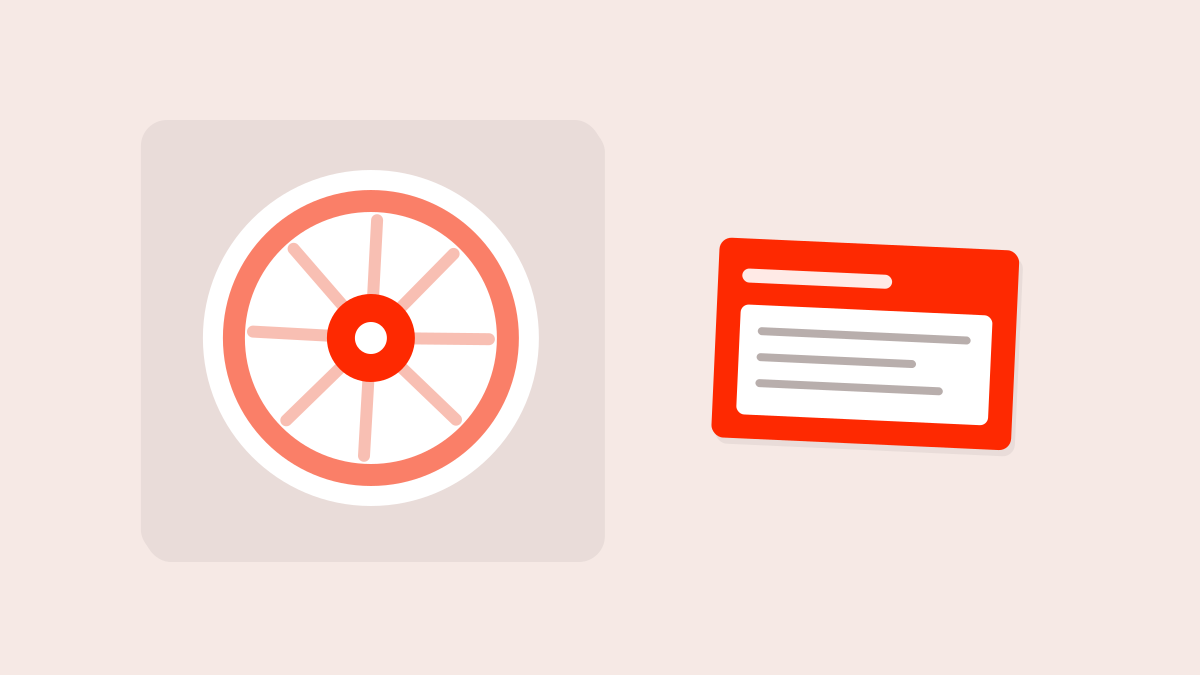
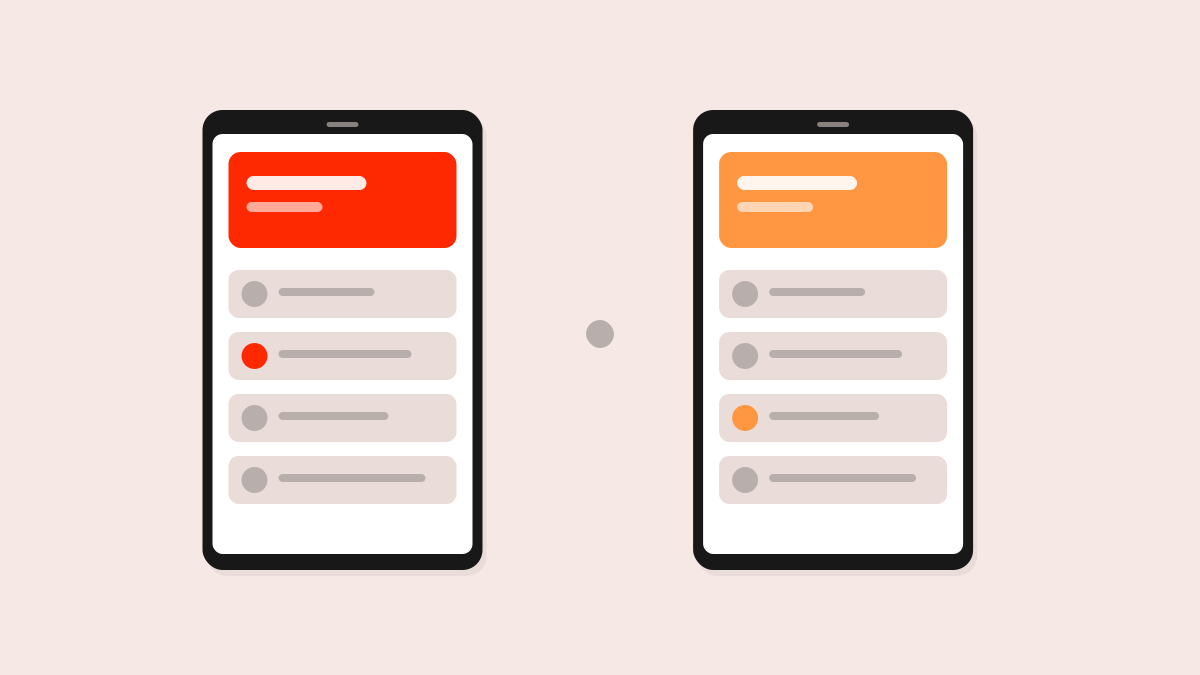
At each step the model does not simply take the single most likely word. It picks from a shortlist of likely candidates with a little randomness, which keeps the writing from sounding robotic. The side effect is that asking the same question twice can produce two different wordings, and occasionally two different conclusions.
If you need consistency, give the model more to work with: paste in the source text, state the format you want, and ask it to say when it is unsure. Vague questions leave more room for the randomness to matter.
None of this makes chatbots less useful. It makes them a particular kind of useful: a fast, tireless drafting partner that needs an editor. Once you think of yourself as that editor, the results get noticeably better.
Does the chatbot remember what I tell it?
Is it thinking?
psst, there is a letter